Living in harmony with nature is the key to going green. We live on a small planet with limited resources that are rapidly disappearing. Greed and unrestrained capitalism will no longer bring us to the promised land, but we can improve the quality of our lives while improving the environment we live in by using more green renewable energy, by recycling and by consuming less of the food and products that we don't need.
EAT
LESS: Most Americans eat a more food than they need to stay healthy.
A lot of food might fill the space in an empty grunting
stomach, but it will also line arterial walls and shorten life expectancy.
Excess sugar, salt and fat in the diet is a major concern in High Schools
that receive funding from soft drink corporations as well as companies that
produce low quality foods.
ABSTAIN FROM MEAT: Livestock farms require a thousand times more space than the
space needed to grow food of the same nutrient value. Animal feed is often
laced with antibiotics that encourage the development of resistant strains
of bacteria. These additives as well as a number of growth hormones lower
the quality of our lives as well as the quality of the world we live in. Another concern has to do with the toxic
effects of decaying meat inside the intestinal tract.
EAT
VEGETABLES AND FRUIT: Contrary to popular beliefs meat is
not an essential ingredient in a healthy diet. The digestive tract of
humans is not well designed to handle meat products.
RECYCLE
PLASTIC BAGS: Non-biodegradable products limit the life expectancy of
landfills. Plastic bags not only clog up landfills but many are caught by
the wind and drift into the oceans to form islands of plastic. Reuse your
plastic bags or invest in cloth tote bags. Encourage your local supermarket
to grant discounts for packing your own food.
RECYCLE
YOUR CAR: or buy a pre-owned car. New cars often develop problems that are
only discovered and repaired after several years. If you purchase a used car
that’s already broken in for half the price of a comparable new car you
may be ahead of the game and save some money in the process.
CONSERVE ENERGY: Adjust your thermostat to conserve energy in the winter and in the summer. Wash your clothes in cold water and they will last longer and require less energy. Air dry your clothes to further reduce energy consumption. Unplug cell phone chargers, battery chargers and printer power supplies when not in us. Over a period of time these small appliances consume an alarming quantity of energy since they are on 24 hours a day. Conventional light bulbs only convert about 3% of the electric power into light. The rest is wasted as heat. CFLs have conversion efficiency over 12% and LEDs convert over 90% of the electric energy into light. I’m sure you are familiar with LED flashlights and LED taillights for cars. Keep an eye out for LED home lighting systems. They will arrive soon enough.
INSULATE
YOUR HOUSE: If your house is over 70 years old it most likely has no
insulation between the studs. An insulated exterior covered with new siding
may be the best solution to this problem. Their may be some insulation in
the attic but their may not be enough. Major heat losses often take place
through poorly insulated attic floors. I would refrain from blowing in
cellulose insulation if possible since this insulation eventually looses its
fire retardant prosperities when left in a dry hot attic. Never place
insulation of any kind between roof rafters since this will cause asphalt
shingles to overheat and dry out.
GO
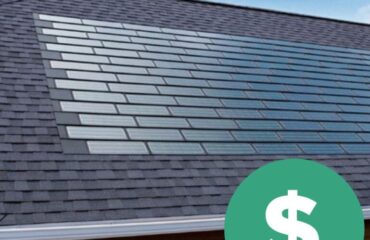
SOLAR: If your roof is oriented in the right direction solar panels and
solar collectors could become practical investments. If your house is in a
remote area far from grid connections you definitely need an array of PV
panels, but if electric power is not an issue consider the benefits of a
solar thermal roof. Installed commercial collectors are quite pricey but you
can save some money if you’re willing to build and install your own.
SAVE
THE ENVIRONMENT AND SAVE MONEY:
with a Modified Trickle Down solar heating
system specially designed for the Do-It-Yourselfer on a limited
budget. Materials for the MTD collector may be purchased for about $4 per
square foot and the storage tanks can be made from FREE 55 gallon recycled
plastic drums or FREE recycled hot water heaters. An MTD starter kit is
available to help you get off to a good start. After you master the assembly
of the first collector you’ll be able to build your own kits and assemble
your own collectors from commonly available materials.
Paula Sobie and her partner set up an urban agriculture business in Victoria, BC, Canada called City Harvest. She explains how
going green is not only a way of life but also a way to earn a living. Her motives are clear,
She wants to earn a living with a clean conscience and a tiny farm that
earns $50,000 a year!
Differential Thermostat
KIT
Solar Heating Controller with
monitors
Trickle Down Solar Heating
MTD Solar Heating
MTD Solar Home
MTD Data
Collector Efficiency
Energy Alternatives
Green Collar Work
Solar Heating
in December
Solar Heating in January
Multi Tank Heat Storage
DIY Solar Heating Panels
Sustainable Living Homesteads
Gallery of Solar Homes
Solar Heated Workshop Plans
Sustainable Solar Heated Workshop
Energy Czar
Sun Money from a Solar Workshop
Solar Thermal Roof
Solar Heated Roof
How to Solar Heat
Solar Pumps
DIY Solar Heat Storage
Solar Thermostatic Controller
Making Temperature Probes
Solar Heat Controller
PV Controller